Spices
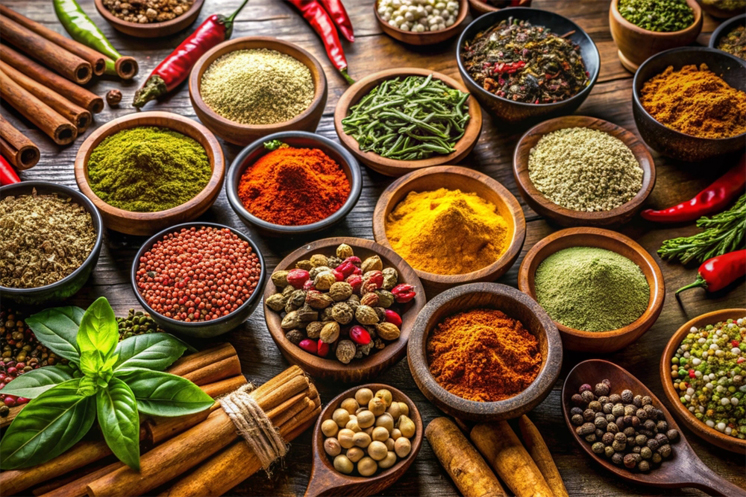
Spices are aromatic plant substances used to flavor, color, or preserve food. Derived from various parts of plants such as seeds, bark, roots, fruits, and flowers, spices have been valued for centuries not only for their culinary properties but also for their medicinal benefits. Common spices include turmeric, which has anti-inflammatory properties; cinnamon, known for its sweet aroma and blood sugar-regulating effects; and black pepper, often referred to as the "king of spices" for its widespread use and ability to enhance the absorption of other nutrients. Spices like cloves, cardamom, cumin, and coriander are staples in many global cuisines, particularly in Indian, Middle Eastern, and Asian cooking. Beyond taste and health, spices have historically played a vital role in trade and exploration, significantly shaping cultural and economic exchanges across civilizations.
Health Benefits of Spices
Rich in Antioxidants
Anti-inflammatory Effects
Digestive Support
Blood Sugar Regulation
Boosts Immune System
Aids Weight Management
Flavorful Alternative to Salt